Quick answer
The three things a Woodstock homeowner needs to know before any plumbing or septic decision: whether the home is on city sewer or septic (no sewer line item on your water bill means septic), how old the plumbing is (70s–80s homes often have end-of-life galvanized lines), and whether the provider actually works Woodstock regularly. Precision Plumbing & Septic is based next door in Canton and runs one crew for both trades.
Woodstock went from small-town Cherokee County to one of metro Atlanta’s fastest-growing suburbs, so its plumbing runs the full range — 1980s ranches with tired drain fields sit a mile from 2022 builds with tankless water heaters. Before any plumbing or septic decision, know three things: whether you’re on city sewer or septic, how old your plumbing is, and whether your provider actually works Woodstock regularly instead of dispatching across the metro.
Precision Plumbing & Septic has worked Woodstock for 25+ years from our base next door in Canton — licensed Georgia Master Plumber, one crew for both plumbing and septic, and we’re in Woodstock multiple times every week.
Septic or Sewer: Which Do You Have?
A surprising number of Woodstock homeowners find out only when something goes wrong. Three quick checks:
- Read your utility bill. A sewer fee on top of water means city sewer. Water-only billing means you’re almost certainly on septic.
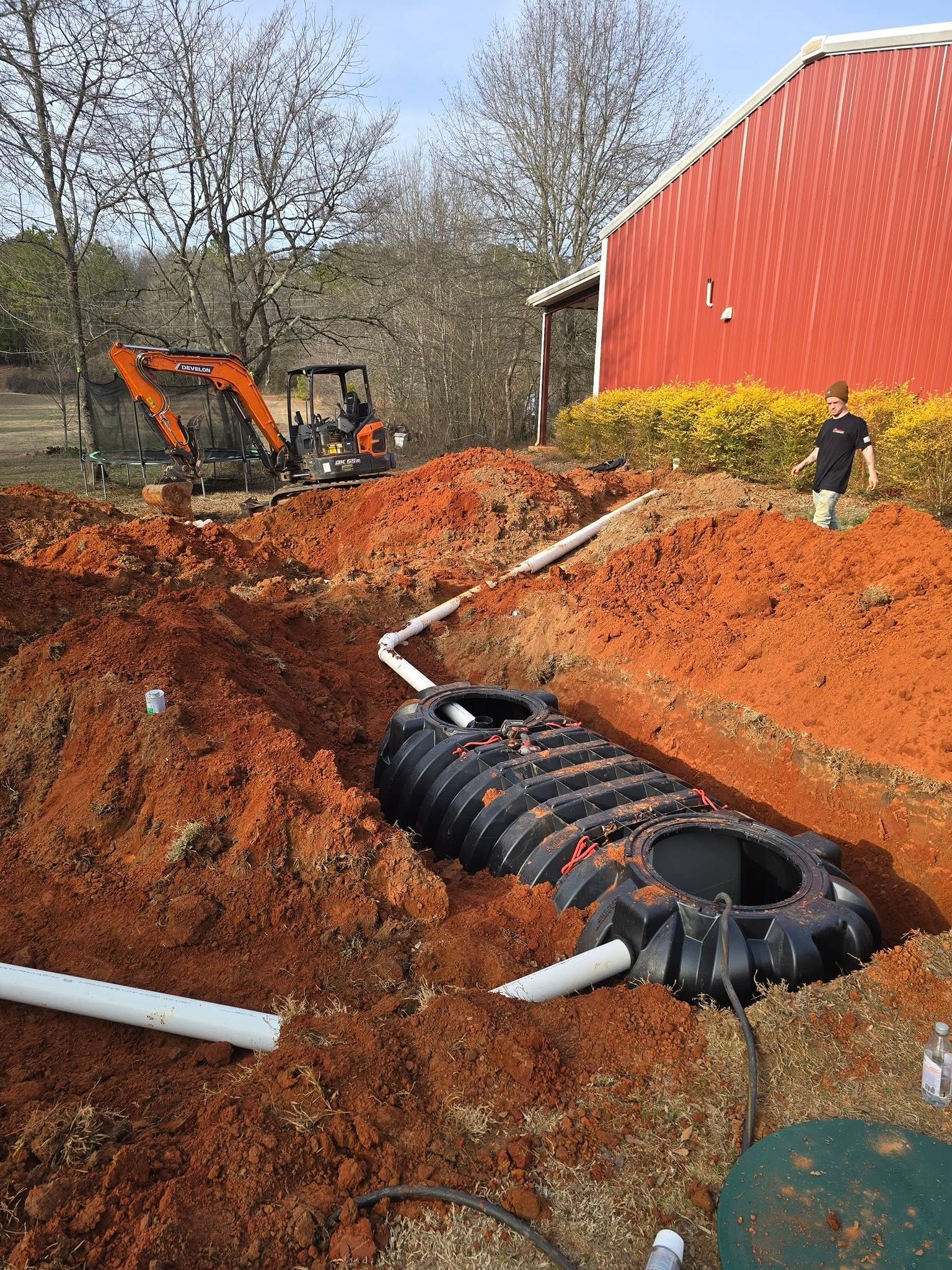
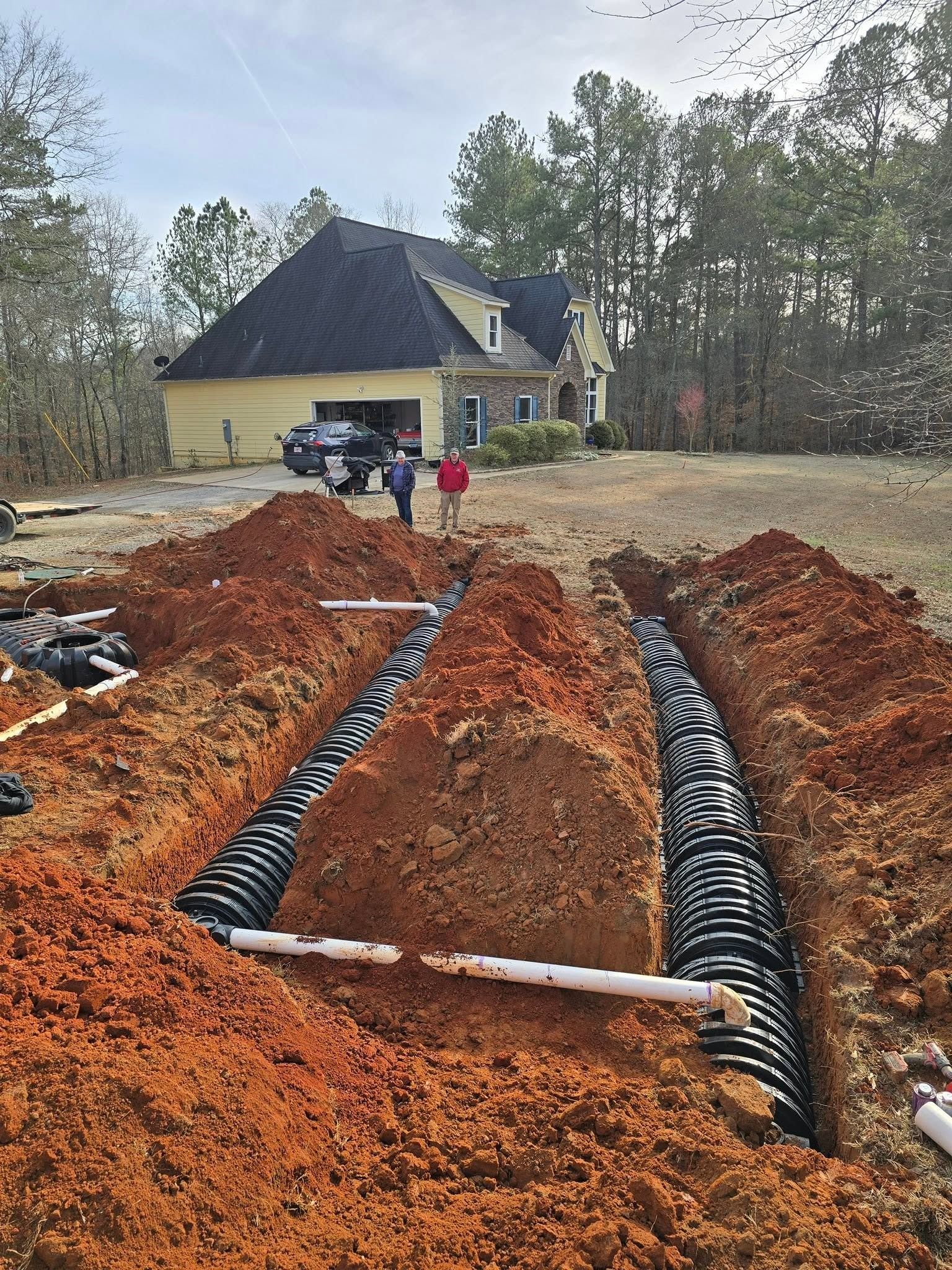
- Look at the yard. Septic tanks have one or two access lids, often partly buried; a drain field is a flat or gently mounded area kept clear of trees and structures.
- Check your purchase inspection paperwork — septic systems are called out specifically.
It matters because the same symptom means different things. A slow drain on sewer is a clog in your plumbing. A slow drain on septic could be a clog, a full tank, or a failing drain field — three problems with three very different price tags. Our septic or plumbing guide walks through telling them apart.
What Fails in Woodstock, by Neighborhood Age
| Home era | Typical systems | What we see fail |
|---|---|---|
| 1970s–80s (older Towne Lake edges, rural lots) | Galvanized supply, septic, mature trees | Pinhole leaks, root intrusion, aging drain fields |
| 1990s–2000s (Eagle Watch, Woodstock Knoll era) | Mixed materials, some polybutylene, septic and sewer | Polybutylene failures, original water heaters dying |
| 2010s+ (newer subdivisions near downtown and Hwy 92) | PEX, mostly sewer | Builder-grade fixture failures, kitchen line grease buildup |
Two local constants cut across all of it. North Georgia red clay holds water and shifts with moisture cycles, stressing buried pipe and slowing drain field percolation in wet stretches. And while winters are mild, the occasional hard freeze fills our schedule with burst-pipe calls — crawl spaces and uninsulated exterior walls are the usual victims.
The Most Common Plumbing Calls We Get in Woodstock
- Water heater failures. Tank units last 10–12 years, and Woodstock has a wave of late-90s and 2000s homes whose original units are aging out now. Past 10 years, treat any new noise, leak, or lukewarm shower as notice — our water heater repair page covers the repair-or-replace call.
- Main line clogs and slow drains. Root intrusion in older wooded neighborhoods, grease buildup in newer ones. Hydro jetting clears most without pipe damage.
- Water line leaks. In 30+ year old homes with original galvanized, we see pinhole leaks, pressure drops, and unexplained bill spikes weekly. Caught early it’s a section water line repair; left long it’s a full replacement.
The Most Common Septic Calls We Get in Woodstock
- Tanks pumped too late. The single most common septic issue anywhere. Pumping is due every 3–5 years and typically runs $300–$600; homeowners who stretch it to 10 or 15 years let solids carry over into the drain field. That’s the difference between a routine septic tank pumping and a five-figure field replacement.
- Drain field saturation. Soggy strips of ground, suspiciously lush grass, and slow drains in the house — common in older fields now past their 20–30 year design life.
- Lift station failures. Woodstock’s rolling terrain means some properties pump effluent uphill to the field. When the pump dies, it looks exactly like a septic backup, but the fix is the pump — see septic lift stations.
- Roots in the house-to-tank line. Mature trees find every joint. Jetting clears it; severe cases need the line repaired.
What to Look for When Hiring in Woodstock
- Actual local presence. A crew dispatched from Marietta or Roswell at 4 PM is doing 45 minutes of rush-hour driving each way, and that cost lands on your invoice. We reach most Woodstock addresses in 30–40 minutes from Canton.
- Upfront pricing. The price comes before the work starts, not after.
- Reviews from real local customers. A 4.9-star rating built on Cherokee County jobs means more than a perfect score from six reviews across three states.
- Both trades under one roof. A plumbing-only outfit facing a septic problem either subcontracts it (your cost) or leaves. One crew that does both diagnoses the whole system in one visit.
FAQ
Do you charge extra to come to Woodstock from Canton?
No. Woodstock is part of our standard service area — we’re there multiple times a week at the same pricing as Canton calls.
How fast can you reach a Woodstock emergency?
We target 60-minute emergency response anywhere in Cherokee County, 24/7, and Woodstock sits well inside that window. Non-emergency calls typically schedule within 1–2 days.
I’m not sure if my home is on septic or sewer. Can you tell me?
Usually, yes. Check your water bill for a sewer line item first; if it’s still unclear, call and we can generally figure it out from your neighborhood and address.
Are you licensed for both plumbing and septic in Georgia?
Yes — licensed Georgia Master Plumber, insured, and we pull permits and arrange inspections through the Cherokee County offices when the work requires them.
What’s the most common Woodstock service call?
A tie between aging water heaters and kitchen drain clogs, followed by first-time septic pumpings and water line leaks in the older neighborhoods.
Whatever side of the system is acting up, one call covers it: (678) 758-3493 — Precision Plumbing & Septic, family-owned since 1999, serving Woodstock and all of Cherokee County.
Need a hand with this in North Georgia?
One crew for plumbing and septic — honest quotes, 24/7 emergencies.