24/7 Emergency Service(678) 658-3170
Precision Plumbing & Septic
Precision Plumbing & Septic, Inc.
HomeBlogSeptic
Septic
Guide
#septic tank pumping process

Septic Tank Pumping: What to Expect on Service Day

Most Canton homeowners should pump every 3-5 years. Here's what 25 years has taught us.

C
Cody
Precision Plumbing & Septic
5 min read
4.9 · 225+ reviews
In this article
Need help with your system?

Precision Plumbing & Septic serves Canton, GA and all of Cherokee County. 24/7 availability.

Call (678) 658-3170Free estimate
4.9 stars · 225+ reviews
25+ years in Cherokee County
60-min emergency response
Canton, GA & North Georgia

Need expert septic service?

Precision Plumbing & Septic has been Canton's most trusted team since 1999. 4.9 stars, 225+ reviews, 24/7 availability, upfront pricing.

Most Canton homeowners have their septic tank pumped every few years — but many have never actually watched the process or know what to expect when the truck pulls up. That uncertainty makes some people nervous. It doesn't need to.

A professional septic pump-out is straightforward, takes less than two hours for most homes, and gives you a clear picture of how your system is doing. Here's exactly what happens when Precision Plumbing & Septic shows up for a service visit in Cherokee County.


Before we arrive — what to know

You don't need to be home, but it's helpful if you are for your first pump-out with us. Knowing the layout of your property, any access challenges, and the history of your system helps us do a better job.

Know where your tank is (if you can). The tank access lid is usually within 10 to 20 feet of your home, often in the backyard. If you have a riser installed, you'll see a round plastic lid at ground level. If you don't know where your tank is, that's fine — we can locate it, though it may add a small amount of time to the visit.

Make sure the access area is clear. If there are vehicles, heavy equipment, or a deck built over the tank access, let us know in advance. We need space for the truck and safe access to the lid.

Don't run large amounts of water immediately before we arrive. A tank full of fresh water makes the pump-out less effective and harder to evaluate. If possible, avoid running the dishwasher, washing machine, or long showers in the hour before service.


Step 1: Locating and accessing the tank

When we arrive, the first thing we do is locate the access lid. For homes where we've serviced the tank before, we know where it is. For new customers, we'll use your property records, the location of your home's main drain line, or a simple probe if needed.

Once we've located the lid, we uncover it. If your tank doesn't have a riser — a plastic collar that brings the lid to ground level — this may require digging down a foot or two. We'll let you know if that's necessary and whether adding a riser would make future visits faster and cheaper (it usually does).

Modern tanks often have two lids — one over the inlet compartment and one over the outlet. We typically access both to do a complete pump-out and inspection.


Step 2: The pump-out itself

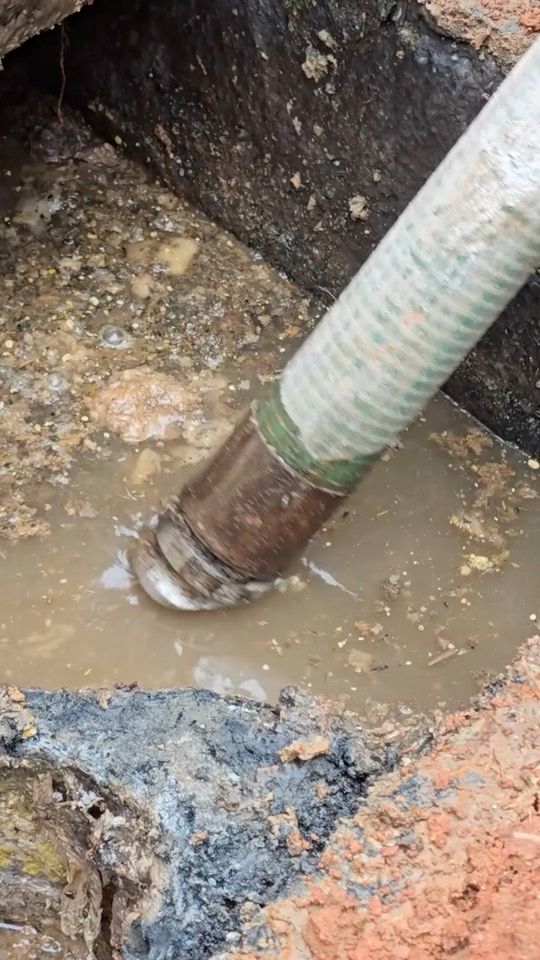
Once we have access, the vacuum hose goes into the tank. Our truck carries a pump powerful enough to remove all contents — both the floating scum layer on top and the settled sludge on the bottom.

A complete pump-out removes everything. Some companies do a "partial pump-out" where they remove only the liquid and leave the sludge. This is less effective, doesn't give you an accurate inspection, and means the tank fills back up faster. We don't do partial pump-outs.

The pumping process itself takes 20 to 45 minutes depending on tank size and how full it is. For a standard 1,000-gallon tank in average condition, it's usually closer to 20 to 30 minutes.

All waste is transported to a licensed disposal facility in compliance with Georgia regulations. We handle that — you don't need to do anything.


Step 3: The inspection

Once the tank is empty, we inspect before closing everything up. This is one of the most valuable parts of the visit — an empty tank gives us a clear view of things we can't see otherwise.

What we're looking at:

  • Inlet and outlet baffles. These are the components that direct flow into and out of the tank correctly. Damaged or missing baffles are one of the most common causes of premature drain field failure. They're also relatively inexpensive to replace if caught early.

  • Tank walls and bottom. We're looking for cracks, root intrusion, or structural damage. Concrete tanks in Cherokee County are generally durable, but older tanks (pre-1990) can develop issues.

  • Sludge accumulation rate. Based on how full the tank was and how long it's been since the last pump-out, we can get a sense of whether your current pumping schedule makes sense or should be adjusted.

  • Signs of drain field stress. If wastewater is backing up from the outlet side, or if we see signs of hydraulic overload, we'll note it and discuss it with you.


Step 4: What we tell you afterward

After the inspection, we'll walk you through what we found. If everything looks good, we tell you that clearly — no vague concerns designed to sell you something you don't need.

If we find something that needs attention — a damaged baffle, a crack, signs of drain field stress — we'll explain what it is, what happens if it's left alone, and what it costs to fix. You get that information before we start any additional work.

This is how Precision has built its reputation over 25 years in Cherokee County. Straight answers, honest recommendations, and prices that don't change after the job starts.

Before we leave, we'll note your tank's condition, the amount removed, and a recommended timeline for your next service. Most homes go on a 3-to-5-year schedule, but we'll suggest the right interval for your specific situation.


How long does the whole visit take?

For a standard residential pump-out with good access and a healthy system:

  • 30 to 90 minutes is typical

  • Longer for larger tanks (1,500+ gallons), difficult access (no riser, buried deep), or systems that need additional attention

  • Same-day results — you know exactly what was found and what it means before we leave

We'll give you a time window when you schedule and do our best to arrive at the beginning of that window, not the end.


Frequently asked questions


Do I need to be home during the pump-out?

Not required, but helpful — especially for your first service. If you're not home, make sure access to the tank area is clear and unlocked. Leave a way for us to reach you in case we have questions or find something that needs your input.


How will I know the pump-out is complete?

A complete pump-out means both the floating scum layer and the settled sludge have been removed and the tank is essentially empty. We don't leave until the job is done. You can ask to see the tank before we close it up — we're happy to show you what we found.


What if my tank lid is buried deep?

We can dig to it, though that adds time and labor. We'd strongly recommend asking about adding a riser — a concrete or plastic extension that brings the lid to ground level. A riser typically costs $100 to $400 and pays for itself in reduced labor costs after the second or third pump-out.


Is there a smell during the pump-out?

There is some odor during the process — it's unavoidable. It dissipates quickly once the hose is withdrawn and the lid is closed. If your neighbors are close, giving them a heads-up is a courteous move. The smell is not dangerous and typically clears within 30 minutes of the visit ending.


When should I schedule my next pump-out?

We'll make a recommendation based on what we found during this visit. For most Cherokee County households, it's every 3 to 5 years. We can add you to a reminder system if you'd like — that way you don't have to track it yourself.


What comes next

Now you know exactly what to expect. A professional pump-out is one of the best maintenance investments a homeowner can make — it's the difference between a small scheduled expense and a large emergency one.


Precision Plumbing & Septic has been serving Canton and all of Cherokee County since 1999. Same-day service is available for most locations. Call (678) 658-3170 to schedule your pump-out or request a free estimate. We'll give you upfront pricing before we arrive — no surprises on the invoice.

Most Canton homeowners have their septic tank pumped every few years — but many have never actually watched the process or know what to expect when the truck pulls up. That uncertainty makes some people nervous. It doesn't need to.

A professional septic pump-out is straightforward, takes less than two hours for most homes, and gives you a clear picture of how your system is doing. Here's exactly what happens when Precision Plumbing & Septic shows up for a service visit in Cherokee County.


Before we arrive — what to know

You don't need to be home, but it's helpful if you are for your first pump-out with us. Knowing the layout of your property, any access challenges, and the history of your system helps us do a better job.

Know where your tank is (if you can). The tank access lid is usually within 10 to 20 feet of your home, often in the backyard. If you have a riser installed, you'll see a round plastic lid at ground level. If you don't know where your tank is, that's fine — we can locate it, though it may add a small amount of time to the visit.

Make sure the access area is clear. If there are vehicles, heavy equipment, or a deck built over the tank access, let us know in advance. We need space for the truck and safe access to the lid.

Don't run large amounts of water immediately before we arrive. A tank full of fresh water makes the pump-out less effective and harder to evaluate. If possible, avoid running the dishwasher, washing machine, or long showers in the hour before service.


Step 1: Locating and accessing the tank

When we arrive, the first thing we do is locate the access lid. For homes where we've serviced the tank before, we know where it is. For new customers, we'll use your property records, the location of your home's main drain line, or a simple probe if needed.

Once we've located the lid, we uncover it. If your tank doesn't have a riser — a plastic collar that brings the lid to ground level — this may require digging down a foot or two. We'll let you know if that's necessary and whether adding a riser would make future visits faster and cheaper (it usually does).

Modern tanks often have two lids — one over the inlet compartment and one over the outlet. We typically access both to do a complete pump-out and inspection.


Step 2: The pump-out itself

Once we have access, the vacuum hose goes into the tank. Our truck carries a pump powerful enough to remove all contents — both the floating scum layer on top and the settled sludge on the bottom.

A complete pump-out removes everything. Some companies do a "partial pump-out" where they remove only the liquid and leave the sludge. This is less effective, doesn't give you an accurate inspection, and means the tank fills back up faster. We don't do partial pump-outs.

The pumping process itself takes 20 to 45 minutes depending on tank size and how full it is. For a standard 1,000-gallon tank in average condition, it's usually closer to 20 to 30 minutes.

All waste is transported to a licensed disposal facility in compliance with Georgia regulations. We handle that — you don't need to do anything.


Step 3: The inspection

Once the tank is empty, we inspect before closing everything up. This is one of the most valuable parts of the visit — an empty tank gives us a clear view of things we can't see otherwise.

What we're looking at:

  • Inlet and outlet baffles. These are the components that direct flow into and out of the tank correctly. Damaged or missing baffles are one of the most common causes of premature drain field failure. They're also relatively inexpensive to replace if caught early.

  • Tank walls and bottom. We're looking for cracks, root intrusion, or structural damage. Concrete tanks in Cherokee County are generally durable, but older tanks (pre-1990) can develop issues.

  • Sludge accumulation rate. Based on how full the tank was and how long it's been since the last pump-out, we can get a sense of whether your current pumping schedule makes sense or should be adjusted.

  • Signs of drain field stress. If wastewater is backing up from the outlet side, or if we see signs of hydraulic overload, we'll note it and discuss it with you.


Step 4: What we tell you afterward

After the inspection, we'll walk you through what we found. If everything looks good, we tell you that clearly — no vague concerns designed to sell you something you don't need.

If we find something that needs attention — a damaged baffle, a crack, signs of drain field stress — we'll explain what it is, what happens if it's left alone, and what it costs to fix. You get that information before we start any additional work.

This is how Precision has built its reputation over 25 years in Cherokee County. Straight answers, honest recommendations, and prices that don't change after the job starts.

Before we leave, we'll note your tank's condition, the amount removed, and a recommended timeline for your next service. Most homes go on a 3-to-5-year schedule, but we'll suggest the right interval for your specific situation.


How long does the whole visit take?

For a standard residential pump-out with good access and a healthy system:

  • 30 to 90 minutes is typical

  • Longer for larger tanks (1,500+ gallons), difficult access (no riser, buried deep), or systems that need additional attention

  • Same-day results — you know exactly what was found and what it means before we leave

We'll give you a time window when you schedule and do our best to arrive at the beginning of that window, not the end.


Frequently asked questions


Do I need to be home during the pump-out?

Not required, but helpful — especially for your first service. If you're not home, make sure access to the tank area is clear and unlocked. Leave a way for us to reach you in case we have questions or find something that needs your input.


How will I know the pump-out is complete?

A complete pump-out means both the floating scum layer and the settled sludge have been removed and the tank is essentially empty. We don't leave until the job is done. You can ask to see the tank before we close it up — we're happy to show you what we found.


What if my tank lid is buried deep?

We can dig to it, though that adds time and labor. We'd strongly recommend asking about adding a riser — a concrete or plastic extension that brings the lid to ground level. A riser typically costs $100 to $400 and pays for itself in reduced labor costs after the second or third pump-out.


Is there a smell during the pump-out?

There is some odor during the process — it's unavoidable. It dissipates quickly once the hose is withdrawn and the lid is closed. If your neighbors are close, giving them a heads-up is a courteous move. The smell is not dangerous and typically clears within 30 minutes of the visit ending.


When should I schedule my next pump-out?

We'll make a recommendation based on what we found during this visit. For most Cherokee County households, it's every 3 to 5 years. We can add you to a reminder system if you'd like — that way you don't have to track it yourself.


What comes next

Now you know exactly what to expect. A professional pump-out is one of the best maintenance investments a homeowner can make — it's the difference between a small scheduled expense and a large emergency one.


Precision Plumbing & Septic has been serving Canton and all of Cherokee County since 1999. Same-day service is available for most locations. Call (678) 658-3170 to schedule your pump-out or request a free estimate. We'll give you upfront pricing before we arrive — no surprises on the invoice.

Your septic system does its job quietly — until it doesn't. When something goes wrong, it doesn't always announce itself with an obvious emergency. More often, it starts with small signals that homeowners ignore for weeks or months before the situation becomes urgent.

In Cherokee County, Precision Plumbing & Septic responds to septic failures that could have been prevented — if the homeowner had known what to look for. Here are the five warning signs we see most often, what they mean, and why waiting makes every one of them worse.


Sign 1 — Slow drains throughout the house


A single slow drain is almost always a localized clog — hair, grease, soap buildup. That's a plumbing problem, not a septic problem.

Multiple slow drains at the same time are different. When your kitchen sink, shower, and washing machine are all draining slowly — especially if they're in different parts of the house — the problem isn't a local clog. It's your septic tank.

This happens when the tank is too full to accept more liquid efficiently. Wastewater backs up in the pipes because there's nowhere for it to go. At this stage, the tank almost certainly needs pumping. It may also indicate that solids have started moving toward the drain field, which is a more serious problem.

What to do: Stop running water as much as possible and call Precision Plumbing & Septic at (678) 658-3170. The longer you wait, the more likely the problem migrates from the tank (fixable) to the drain field (expensive).


Sign 2 — Gurgling sounds from toilets or drains

Gurgling after you flush — or while water drains in your kitchen or shower — is the sound of air being pushed back through your pipes because the normal drainage path is blocked or overwhelmed.

It's easy to dismiss this as a quirky plumbing noise. Don't. It's your system under pressure, and the gurgling often precedes a backup by days or weeks.

In some cases, gurgling is caused by a venting issue rather than a full tank. Either way, it warrants a professional look. Both problems get worse if ignored, and a full septic backup is one of the most unpleasant and expensive home emergencies a homeowner can face.

What to do: Note which drains are gurgling and whether it's happening after specific activities (flushing, running the dishwasher, doing laundry). That information helps Precision diagnose the issue faster when we arrive.


Sign 3 — Sewage odors inside or outside the home

A properly functioning septic system has no smell. The tank is sealed, the gases are vented away from the house, and your home should never smell like a sewage facility.

If you're smelling rotten eggs or sewage — inside near drains, outside near the tank location, or in the yard over the drain field — something has failed:

  • Odors near indoor drains often indicate a dry P-trap (fixable with water) or a failing baffle inside the tank that allows gas to travel back through the pipes.

  • Odors near the tank lid may mean the lid has cracked or shifted, or that the tank is venting improperly.

  • Odors near the drain field can mean effluent is surfacing — a serious sign of drain field stress or failure.

Don't try to mask septic odors with air freshener and move on. The gas coming from a failing septic system includes hydrogen sulfide, which is toxic at higher concentrations. Beyond the health concern, the underlying problem will only get worse.

What to do: Call (678) 658-3170). We can usually diagnose the source of the odor on the same visit as the inspection.


Sign 4 — Soggy ground or unusually green grass over the drain field

This is one of the clearest visual signs of septic failure — and one that a lot of homeowners walk past without recognizing it.

Do you have a patch of grass in your yard that's significantly greener, lusher, or more vigorous than the surrounding lawn? Does the ground feel soft or spongy when you walk over the area where your drain field runs?

Both of those are signs that effluent — partially treated wastewater — is surfacing from the drain field instead of being absorbed by the soil the way it's supposed to. The nutrients in the effluent act as fertilizer, which is why the grass looks healthy right up until the system fails completely.

In Cherokee County, clay-heavy soil makes this problem more common. Red Georgia clay doesn't absorb water as efficiently as sandy or loamy soil, so drain fields work harder here and can fail sooner — especially in older systems that were undersized for current usage.

What to do: Don't let children or pets play in that area. Surfacing effluent contains pathogens. Call Precision at (678) 658-3170) for an inspection. Depending on what we find, the solution may be a pump-out and a rest period for the field, or it may require more significant work.


Sign 5 — Sewage backing up into the home

This is the sign no one misses — and the one you should never let your situation reach.

When raw sewage backs up into your toilets, sinks, or shower drains, it means your septic system has completely failed to accept any more waste. The tank is full, the pipes are overwhelmed, and everything is coming back the way it went in.

At this point:

  • Stop all water use immediately

  • Keep people away from affected drains

  • Call Precision Plumbing & Septic for emergency service at (678) 658-3170 — we're available 24/7 and can typically arrive within 60 minutes anywhere in Cherokee County

Sewage backups are hazardous. Raw sewage contains bacteria, viruses, and parasites that cause serious illness. This is not a situation to clean up yourself with a mop and move on from. Professional remediation is necessary.

The good news: if you noticed signs 1 through 4 and acted on them, you almost certainly never reach sign 5. Most septic failures that result in backups were preceded by weeks or months of warning signs that were ignored or unrecognized.


What to do if you notice these signs

Step 1 — Reduce water use. Every gallon that goes into an overwhelmed system makes the situation worse. Hold off on laundry, dishwasher use, and long showers until the situation is assessed.

Step 2 — Identify what you're seeing. Is it slow drains, odors, soggy ground, or a backup? Which drains are affected? Is the problem getting worse? This information helps us diagnose faster.

Step 3 — Call Precision Plumbing & Septic. We serve Cherokee County and all surrounding areas. Same-day service is available for most locations. (678) 658-3170

Step 4 — Don't add chemicals. Septic tank additives and "bacterial treatments" sold at hardware stores don't fix a full or failing system. At best they do nothing. At worst they disrupt the bacterial ecosystem your system depends on to process waste.


Frequently asked questions


Can a failing septic system be repaired, or does it need to be replaced?

It depends on what's failing. A full tank just needs pumping. A cracked baffle or damaged inlet/outlet can often be repaired. A failed drain field is more serious — depending on the extent of failure, it may require field repair, expansion, or full replacement. Precision will give you an honest assessment of what's actually needed.


How quickly can a septic problem go from slow drains to full backup?

It can happen in days. A tank that's 80% full and seeing normal household use can reach full capacity quickly. That's why the earlier warning signs — slow drains and gurgling — shouldn't be dismissed as minor inconveniences.


Is it safe to stay in the house if my septic system is having problems?

For slow drains or odors, generally yes — though you should minimize water use. If you have a sewage backup, vacate affected areas and call immediately. Raw sewage exposure is a health risk that should be taken seriously.


How long does a septic system last in Georgia?

A properly maintained septic system in Georgia typically lasts 25 to 40 years. The tank itself can last much longer — concrete tanks often exceed 50 years if maintained. The drain field usually has the shorter lifespan and is the most vulnerable component. Regular pumping is the single best thing you can do to protect the drain field.


Does Precision Plumbing & Septic handle emergency calls?

Yes. We're available 24/7 for septic and plumbing emergencies throughout Cherokee County and surrounding areas. Our target arrival time for emergencies is 60 minutes. Call (678) 658-3170) any time.


The bottom line

Your septic system gives you plenty of warning before it fails completely. Slow drains, gurgling pipes, odors, soggy ground — each of these is a signal that shouldn't be ignored. Catching a problem early almost always means a pump-out or a simple repair. Ignoring it often means an emergency, a backup, and potentially a drain field replacement that costs tens of thousands of dollars.


Precision Plumbing & Septic has been serving Canton, GA and Cherokee County for over 25 years. We're rated 4.9 stars on Google and available 24/7. If you're seeing any of these signs, call us at (678) 658-3170 — we'll tell you exactly what's going on and what it will cost to fix it, before we start any work.

Your septic system does its job quietly — until it doesn't. When something goes wrong, it doesn't always announce itself with an obvious emergency. More often, it starts with small signals that homeowners ignore for weeks or months before the situation becomes urgent.

In Cherokee County, Precision Plumbing & Septic responds to septic failures that could have been prevented — if the homeowner had known what to look for. Here are the five warning signs we see most often, what they mean, and why waiting makes every one of them worse.


Sign 1 — Slow drains throughout the house


A single slow drain is almost always a localized clog — hair, grease, soap buildup. That's a plumbing problem, not a septic problem.

Multiple slow drains at the same time are different. When your kitchen sink, shower, and washing machine are all draining slowly — especially if they're in different parts of the house — the problem isn't a local clog. It's your septic tank.

This happens when the tank is too full to accept more liquid efficiently. Wastewater backs up in the pipes because there's nowhere for it to go. At this stage, the tank almost certainly needs pumping. It may also indicate that solids have started moving toward the drain field, which is a more serious problem.

What to do: Stop running water as much as possible and call Precision Plumbing & Septic at (678) 658-3170. The longer you wait, the more likely the problem migrates from the tank (fixable) to the drain field (expensive).


Sign 2 — Gurgling sounds from toilets or drains

Gurgling after you flush — or while water drains in your kitchen or shower — is the sound of air being pushed back through your pipes because the normal drainage path is blocked or overwhelmed.

It's easy to dismiss this as a quirky plumbing noise. Don't. It's your system under pressure, and the gurgling often precedes a backup by days or weeks.

In some cases, gurgling is caused by a venting issue rather than a full tank. Either way, it warrants a professional look. Both problems get worse if ignored, and a full septic backup is one of the most unpleasant and expensive home emergencies a homeowner can face.

What to do: Note which drains are gurgling and whether it's happening after specific activities (flushing, running the dishwasher, doing laundry). That information helps Precision diagnose the issue faster when we arrive.


Sign 3 — Sewage odors inside or outside the home

A properly functioning septic system has no smell. The tank is sealed, the gases are vented away from the house, and your home should never smell like a sewage facility.

If you're smelling rotten eggs or sewage — inside near drains, outside near the tank location, or in the yard over the drain field — something has failed:

  • Odors near indoor drains often indicate a dry P-trap (fixable with water) or a failing baffle inside the tank that allows gas to travel back through the pipes.

  • Odors near the tank lid may mean the lid has cracked or shifted, or that the tank is venting improperly.

  • Odors near the drain field can mean effluent is surfacing — a serious sign of drain field stress or failure.

Don't try to mask septic odors with air freshener and move on. The gas coming from a failing septic system includes hydrogen sulfide, which is toxic at higher concentrations. Beyond the health concern, the underlying problem will only get worse.

What to do: Call (678) 658-3170). We can usually diagnose the source of the odor on the same visit as the inspection.


Sign 4 — Soggy ground or unusually green grass over the drain field

This is one of the clearest visual signs of septic failure — and one that a lot of homeowners walk past without recognizing it.

Do you have a patch of grass in your yard that's significantly greener, lusher, or more vigorous than the surrounding lawn? Does the ground feel soft or spongy when you walk over the area where your drain field runs?

Both of those are signs that effluent — partially treated wastewater — is surfacing from the drain field instead of being absorbed by the soil the way it's supposed to. The nutrients in the effluent act as fertilizer, which is why the grass looks healthy right up until the system fails completely.

In Cherokee County, clay-heavy soil makes this problem more common. Red Georgia clay doesn't absorb water as efficiently as sandy or loamy soil, so drain fields work harder here and can fail sooner — especially in older systems that were undersized for current usage.

What to do: Don't let children or pets play in that area. Surfacing effluent contains pathogens. Call Precision at (678) 658-3170) for an inspection. Depending on what we find, the solution may be a pump-out and a rest period for the field, or it may require more significant work.


Sign 5 — Sewage backing up into the home

This is the sign no one misses — and the one you should never let your situation reach.

When raw sewage backs up into your toilets, sinks, or shower drains, it means your septic system has completely failed to accept any more waste. The tank is full, the pipes are overwhelmed, and everything is coming back the way it went in.

At this point:

  • Stop all water use immediately

  • Keep people away from affected drains

  • Call Precision Plumbing & Septic for emergency service at (678) 658-3170 — we're available 24/7 and can typically arrive within 60 minutes anywhere in Cherokee County

Sewage backups are hazardous. Raw sewage contains bacteria, viruses, and parasites that cause serious illness. This is not a situation to clean up yourself with a mop and move on from. Professional remediation is necessary.

The good news: if you noticed signs 1 through 4 and acted on them, you almost certainly never reach sign 5. Most septic failures that result in backups were preceded by weeks or months of warning signs that were ignored or unrecognized.


What to do if you notice these signs

Step 1 — Reduce water use. Every gallon that goes into an overwhelmed system makes the situation worse. Hold off on laundry, dishwasher use, and long showers until the situation is assessed.

Step 2 — Identify what you're seeing. Is it slow drains, odors, soggy ground, or a backup? Which drains are affected? Is the problem getting worse? This information helps us diagnose faster.

Step 3 — Call Precision Plumbing & Septic. We serve Cherokee County and all surrounding areas. Same-day service is available for most locations. (678) 658-3170

Step 4 — Don't add chemicals. Septic tank additives and "bacterial treatments" sold at hardware stores don't fix a full or failing system. At best they do nothing. At worst they disrupt the bacterial ecosystem your system depends on to process waste.


Frequently asked questions


Can a failing septic system be repaired, or does it need to be replaced?

It depends on what's failing. A full tank just needs pumping. A cracked baffle or damaged inlet/outlet can often be repaired. A failed drain field is more serious — depending on the extent of failure, it may require field repair, expansion, or full replacement. Precision will give you an honest assessment of what's actually needed.


How quickly can a septic problem go from slow drains to full backup?

It can happen in days. A tank that's 80% full and seeing normal household use can reach full capacity quickly. That's why the earlier warning signs — slow drains and gurgling — shouldn't be dismissed as minor inconveniences.


Is it safe to stay in the house if my septic system is having problems?

For slow drains or odors, generally yes — though you should minimize water use. If you have a sewage backup, vacate affected areas and call immediately. Raw sewage exposure is a health risk that should be taken seriously.


How long does a septic system last in Georgia?

A properly maintained septic system in Georgia typically lasts 25 to 40 years. The tank itself can last much longer — concrete tanks often exceed 50 years if maintained. The drain field usually has the shorter lifespan and is the most vulnerable component. Regular pumping is the single best thing you can do to protect the drain field.


Does Precision Plumbing & Septic handle emergency calls?

Yes. We're available 24/7 for septic and plumbing emergencies throughout Cherokee County and surrounding areas. Our target arrival time for emergencies is 60 minutes. Call (678) 658-3170) any time.


The bottom line

Your septic system gives you plenty of warning before it fails completely. Slow drains, gurgling pipes, odors, soggy ground — each of these is a signal that shouldn't be ignored. Catching a problem early almost always means a pump-out or a simple repair. Ignoring it often means an emergency, a backup, and potentially a drain field replacement that costs tens of thousands of dollars.


Precision Plumbing & Septic has been serving Canton, GA and Cherokee County for over 25 years. We're rated 4.9 stars on Google and available 24/7. If you're seeing any of these signs, call us at (678) 658-3170 — we'll tell you exactly what's going on and what it will cost to fix it, before we start any work.

Most Canton homeowners should pump their septic tank every 3 to 5 years — but that's a starting point, not a rule. The right answer for your home depends on how many people live there, how big your tank is, and what kind of soil sits beneath your drain field.

At Precision Plumbing & Septic, we've been pumping septic tanks in Cherokee County for over 25 years. Here's what we've learned about how often homes in this area actually need service — and the warning signs that mean you can't wait.


How often do septic tanks need pumping?

The EPA recommends pumping most residential septic tanks every 3 to 5 years. That range holds up well for typical Cherokee County homes — a family of four with a standard 1,000-gallon tank usually lands right in that window.

Here's a general guide based on household size:

  • 1–2 people: Every 5–7 years

  • 3–4 people: Every 3–5 years

  • 5–6 people: Every 2–3 years

  • 7+ people: Every 1–2 years

That said, these are estimates. The only way to know for certain where you stand is a professional inspection — which is something we include with every pump-out.


What factors affect your pumping schedule?

In Canton and the surrounding North Georgia area, a few things can push your tank toward the more frequent end of that range:

Tank size. Older homes in Cherokee County often have 750-gallon tanks installed decades ago when households were smaller. A 750-gallon tank serving a family of four fills up faster than the schedule above suggests.

Garbage disposal use. If you regularly grind food waste, you're adding solid material to your tank that breaks down slowly. Homes with heavy garbage disposal use typically need pumping 30–40% more often.

How you do laundry. Multiple loads per day, especially back-to-back, can overwhelm your drain field and push solids into areas they shouldn't go. Spacing out laundry over the week makes a real difference.

Clay-heavy soil. Much of Cherokee County sits on red Georgia clay, which doesn't drain as efficiently as sandy soil. This puts additional stress on drain fields and is one reason we recommend inspections every 2–3 years for older systems here, even if pumping isn't needed yet.

Number of guests or Airbnb activity. If your home sees frequent overnight visitors or you operate a short-term rental, your system is working harder than the household-size charts assume.


Signs your tank needs pumping now

Don't wait for your scheduled service date if you notice any of these. They're your system telling you it's overdue:

Slow drains throughout the house. One slow drain is usually a clog. Multiple slow drains at the same time — especially in different parts of the house — often point to a full tank.

Gurgling sounds after flushing. That sound is air getting pushed back through the system because there's no room for water to move properly.

Soggy ground or unusually green grass over the drain field. Wet spots or lush patches above where your drain field runs are a clear sign the system is backing up into the soil.

Sewage odors inside or outside the home. Any smell of rotten eggs or sewage near drains, outside near the tank lid, or in the yard near the drain field means something is wrong. This isn't a "wait and see" situation.

Sewage backing up into drains or toilets. If it's gotten to this point, you need to call immediately. A full backup means the system has been overwhelmed and the risk of damage to your drain field — which is expensive to replace — goes up sharply.


What happens during a septic pump-out?

When Precision Plumbing & Septic comes out for a pump-out in Canton, here's what the visit looks like:

  1. We locate and uncover the access lids. If you don't know where your tank is, we can find it. Most Cherokee County tanks are within 20 feet of the house.

  2. We pump out all liquid and solid waste. A complete pump-out removes everything — both the floating scum layer on top and the sludge that has settled on the bottom.

  3. We visually inspect the tank and baffles. We check the inlet and outlet baffles for condition, look for cracks or damage to the tank walls, and assess how your system is handling its load.

  4. We check drain field conditions. We're looking for signs of early failure — soggy ground, surfacing effluent, or unusual odors — while we're already on-site.

  5. We let you know what we found. If we see anything that needs attention, we tell you clearly and give you an honest recommendation. No upselling, no pressure.

The whole visit typically takes 1 to 2 hours depending on tank size and access.


How much does septic pumping cost in Georgia?


In the Canton and Cherokee County area, expect to pay $300 to $600 for a standard residential pump-out. Larger tanks (1,500+ gallons) or difficult access situations may run higher.

That price range reflects honest market pricing for this area. Be cautious of significantly lower quotes — some companies charge a low pump-out price and then add fees for the inspection, the waste disposal, or extra labor once they're on-site.

At Precision, the price we quote is the price you pay. No hidden fees, no add-ons after the fact.

Same-day service is available for most locations in Cherokee County. Call us at (678) 658-3170 to confirm availability and get a quote before we arrive.


Frequently asked questions


How do I know when my septic tank was last pumped?

If you're a new homeowner, check your home inspection report — it should note whether a septic inspection was done at the time of purchase. If not, a property records search or a call to the previous owner may help. When in doubt, schedule an inspection. Precision can assess your tank's current level and let you know where you stand.


Can I pump my own septic tank?

No. Septic waste is classified as hazardous material in Georgia. It must be pumped by a licensed contractor using a vacuum truck and disposed of at an approved facility. Attempting to pump, open, or drain a tank yourself is illegal and dangerous.


What happens if I skip septic pumping for too long?

The solids in your tank build up until there's no room for liquid. When that happens, solids start flowing into your drain field and clogging the soil. Drain field replacement in Georgia typically costs $5,000 to $20,000 — versus $300 to $600 for a pump-out. The math on regular maintenance is clear.


Does Precision Plumbing & Septic serve areas outside Canton?

Yes. We serve all of Cherokee County and surrounding areas including Woodstock, Holly Springs, Ball Ground, Waleska, Alpharetta, Cumming, Cartersville, and more. Call (678) 658-3170 to confirm service availability for your address.


How do I schedule a septic pump-out with Precision?

Call us at (678) 658-3170 or fill out the contact form at precisionplumbingpros.com. We offer same-day service for most Cherokee County locations and will give you upfront pricing before we arrive.


The bottom line

For most Canton homeowners, a septic pump-out every 3 to 5 years is the right baseline. Adjust that schedule based on household size, tank capacity, and how the system is performing. And if you're seeing any of the warning signs above — slow drains, odors, soggy ground — don't wait for your next scheduled service.

Precision Plumbing & Septic has been pumping tanks in Cherokee County since 1999. We're locally based, available 24/7, and we stand behind every job with honest pricing and no hidden fees. Call (678) 658-3170 for same-day service in Canton and all of North Georgia.

Most Canton homeowners should pump their septic tank every 3 to 5 years — but that's a starting point, not a rule. The right answer for your home depends on how many people live there, how big your tank is, and what kind of soil sits beneath your drain field.

At Precision Plumbing & Septic, we've been pumping septic tanks in Cherokee County for over 25 years. Here's what we've learned about how often homes in this area actually need service — and the warning signs that mean you can't wait.


How often do septic tanks need pumping?

The EPA recommends pumping most residential septic tanks every 3 to 5 years. That range holds up well for typical Cherokee County homes — a family of four with a standard 1,000-gallon tank usually lands right in that window.

Here's a general guide based on household size:

  • 1–2 people: Every 5–7 years

  • 3–4 people: Every 3–5 years

  • 5–6 people: Every 2–3 years

  • 7+ people: Every 1–2 years

That said, these are estimates. The only way to know for certain where you stand is a professional inspection — which is something we include with every pump-out.


What factors affect your pumping schedule?

In Canton and the surrounding North Georgia area, a few things can push your tank toward the more frequent end of that range:

Tank size. Older homes in Cherokee County often have 750-gallon tanks installed decades ago when households were smaller. A 750-gallon tank serving a family of four fills up faster than the schedule above suggests.

Garbage disposal use. If you regularly grind food waste, you're adding solid material to your tank that breaks down slowly. Homes with heavy garbage disposal use typically need pumping 30–40% more often.

How you do laundry. Multiple loads per day, especially back-to-back, can overwhelm your drain field and push solids into areas they shouldn't go. Spacing out laundry over the week makes a real difference.

Clay-heavy soil. Much of Cherokee County sits on red Georgia clay, which doesn't drain as efficiently as sandy soil. This puts additional stress on drain fields and is one reason we recommend inspections every 2–3 years for older systems here, even if pumping isn't needed yet.

Number of guests or Airbnb activity. If your home sees frequent overnight visitors or you operate a short-term rental, your system is working harder than the household-size charts assume.


Signs your tank needs pumping now

Don't wait for your scheduled service date if you notice any of these. They're your system telling you it's overdue:

Slow drains throughout the house. One slow drain is usually a clog. Multiple slow drains at the same time — especially in different parts of the house — often point to a full tank.

Gurgling sounds after flushing. That sound is air getting pushed back through the system because there's no room for water to move properly.

Soggy ground or unusually green grass over the drain field. Wet spots or lush patches above where your drain field runs are a clear sign the system is backing up into the soil.

Sewage odors inside or outside the home. Any smell of rotten eggs or sewage near drains, outside near the tank lid, or in the yard near the drain field means something is wrong. This isn't a "wait and see" situation.

Sewage backing up into drains or toilets. If it's gotten to this point, you need to call immediately. A full backup means the system has been overwhelmed and the risk of damage to your drain field — which is expensive to replace — goes up sharply.


What happens during a septic pump-out?

When Precision Plumbing & Septic comes out for a pump-out in Canton, here's what the visit looks like:

  1. We locate and uncover the access lids. If you don't know where your tank is, we can find it. Most Cherokee County tanks are within 20 feet of the house.

  2. We pump out all liquid and solid waste. A complete pump-out removes everything — both the floating scum layer on top and the sludge that has settled on the bottom.

  3. We visually inspect the tank and baffles. We check the inlet and outlet baffles for condition, look for cracks or damage to the tank walls, and assess how your system is handling its load.

  4. We check drain field conditions. We're looking for signs of early failure — soggy ground, surfacing effluent, or unusual odors — while we're already on-site.

  5. We let you know what we found. If we see anything that needs attention, we tell you clearly and give you an honest recommendation. No upselling, no pressure.

The whole visit typically takes 1 to 2 hours depending on tank size and access.


How much does septic pumping cost in Georgia?


In the Canton and Cherokee County area, expect to pay $300 to $600 for a standard residential pump-out. Larger tanks (1,500+ gallons) or difficult access situations may run higher.

That price range reflects honest market pricing for this area. Be cautious of significantly lower quotes — some companies charge a low pump-out price and then add fees for the inspection, the waste disposal, or extra labor once they're on-site.

At Precision, the price we quote is the price you pay. No hidden fees, no add-ons after the fact.

Same-day service is available for most locations in Cherokee County. Call us at (678) 658-3170 to confirm availability and get a quote before we arrive.


Frequently asked questions


How do I know when my septic tank was last pumped?

If you're a new homeowner, check your home inspection report — it should note whether a septic inspection was done at the time of purchase. If not, a property records search or a call to the previous owner may help. When in doubt, schedule an inspection. Precision can assess your tank's current level and let you know where you stand.


Can I pump my own septic tank?

No. Septic waste is classified as hazardous material in Georgia. It must be pumped by a licensed contractor using a vacuum truck and disposed of at an approved facility. Attempting to pump, open, or drain a tank yourself is illegal and dangerous.


What happens if I skip septic pumping for too long?

The solids in your tank build up until there's no room for liquid. When that happens, solids start flowing into your drain field and clogging the soil. Drain field replacement in Georgia typically costs $5,000 to $20,000 — versus $300 to $600 for a pump-out. The math on regular maintenance is clear.


Does Precision Plumbing & Septic serve areas outside Canton?

Yes. We serve all of Cherokee County and surrounding areas including Woodstock, Holly Springs, Ball Ground, Waleska, Alpharetta, Cumming, Cartersville, and more. Call (678) 658-3170 to confirm service availability for your address.


How do I schedule a septic pump-out with Precision?

Call us at (678) 658-3170 or fill out the contact form at precisionplumbingpros.com. We offer same-day service for most Cherokee County locations and will give you upfront pricing before we arrive.


The bottom line

For most Canton homeowners, a septic pump-out every 3 to 5 years is the right baseline. Adjust that schedule based on household size, tank capacity, and how the system is performing. And if you're seeing any of the warning signs above — slow drains, odors, soggy ground — don't wait for your next scheduled service.

Precision Plumbing & Septic has been pumping tanks in Cherokee County since 1999. We're locally based, available 24/7, and we stand behind every job with honest pricing and no hidden fees. Call (678) 658-3170 for same-day service in Canton and all of North Georgia.

Precision Plumbing & Septic
PrecisionPlumbing & Septic

Septic tank service and plumbing for Canton, GA. Owner-operated for over 25 years.

4.9on Google

© 2026 Precision Plumbing & Septic. All rights reserved.