
Quick answer
North Georgia's red piedmont clay percolates slowly, holds water in wet months, and compacts easily — the three things a septic drain field hates most. On clay-heavy lots that usually means a larger drain field or an engineered system at install time, and stricter pumping discipline (every 3–5 years) for existing systems, because a clay-locked field that clogs rarely recovers.
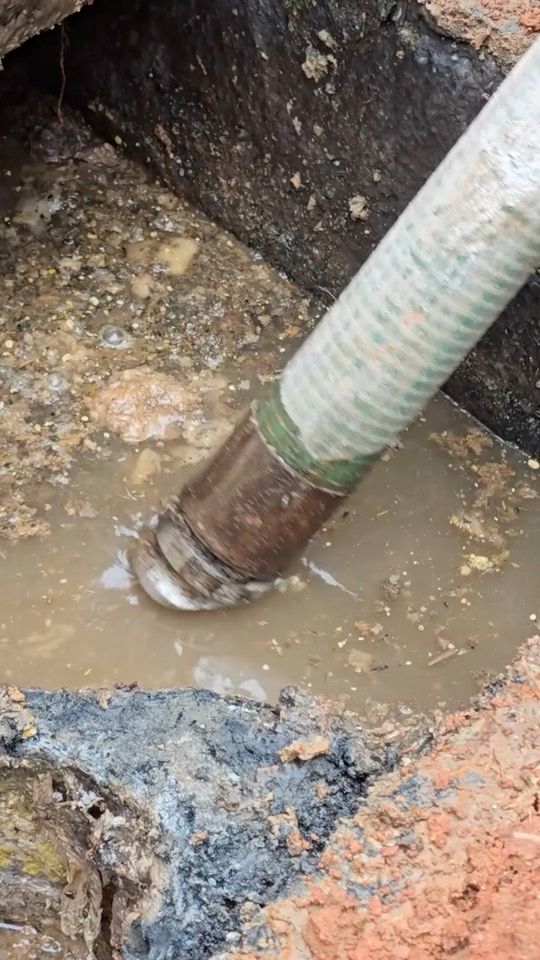
Dig anywhere in Cherokee County and you hit it fast: that dense, rust-orange clay that sticks to your boots in January and bakes into brick by July. It is the defining feature of North Georgia dirt — and it is quietly the biggest factor in how septic systems here are designed, how long they last, and why some of them fail years earlier than they should.
The short version: red clay drains slowly, holds water when it rains, and compacts easily. Those are precisely the three things a septic drain field depends on the soil not doing. After 25+ years installing and repairing systems across Canton, Woodstock, Cumming and the surrounding counties, we can usually tell how a drain field is doing before we open a single lid — just from the soil and the slope of the lot.
What North Georgia’s soil actually is
Most of our service area sits on Piedmont soils — old, deeply weathered ground where the topsoil is thin and the subsoil is dense red clay, colored by iron oxides. Two properties matter for septic:
- Slow percolation. A drain field works by letting treated effluent seep down through soil, where microbes finish the cleanup. Sandy soil accepts water quickly. Our clay accepts it slowly — sometimes very slowly. That’s exactly what a percolation (“perc”) test measures, and it’s why perc results drive the entire design of a new septic system in Georgia.
- Shrink–swell and compaction. Clay swells when wet and shrinks hard when dry, and it compacts under weight far more readily than sandy loam. A pickup parked over a drain field in February can do damage that doesn’t show up until the backups start in spring.
What clay does to a drain field
| Clay behavior | What it does to your system | What to do about it |
|---|---|---|
| Slow percolation | Effluent disperses slowly; field runs “fuller” than the same field in sandy soil | Size the field to the perc test — never undersize on clay |
| Winter saturation | Saturated clay accepts almost nothing; heavy-rain weeks push fields to the limit | Route gutters and downspouts away from the field; fix leaking fixtures fast |
| Compaction | Crushed or compressed lateral lines, squeezed soil pores | Never drive or park on the field; skip the shed and the above-ground pool too |
| Unforgiving of solids | Solids that escape a full tank clog clay pores that barely pass water anyway | Pump on schedule — every 3–5 years, closer to 3 for big households |
That last row is the one that costs homeowners real money. In fast-draining soil, a drain field can shrug off some abuse. In clay, the margin is thin: once escaped solids seal off pores that were already slow, the field stops accepting water — and a fully clay-locked field usually can’t be repaired, only replaced at $6,000–$15,000+.
What it means when you’re installing a system
On clay-heavy lots, the perc test tells the county — and us — what your soil can actually absorb. The result shapes the design and the budget:
| System type | When it’s used | Typical installed cost |
|---|---|---|
| Conventional gravity | Decent perc, workable slope | $8,000–$20,000 |
| Chamber system | Moderate perc; flexible layout on tight lots | $8,000–$20,000 |
| Engineered / mound | Poor perc, high water table, or steep slope | $12,000–$25,000+ |
A lot in a sandy river bottom and a lot on a red-clay hillside in Waleska can be the same acreage and need very different systems. That’s not an upsell — it’s the soil report. We handle the soil testing, the county permit and the design as part of every septic installation, and financing through Wisetack is available for the bigger engineered jobs.
One more clay-country note: on slopes — think Lake Arrowhead or the foothills around Jasper — the drain field often has to sit uphill of the tank, which is where septic lift stations come in.
Protecting an existing system in clay country
If your home is on septic in Cherokee, Forsyth, Bartow or Pickens County, a few habits matter more here than they would almost anywhere else:
- Pump every 3–5 years, no excuses. It’s the single cheapest protection ($300–$600) for a drain field that has no capacity to spare.
- Keep surface water off the field. Downspouts, French drains and irrigation should discharge well away from it — saturated clay can’t take your laundry water and the roof runoff.
- Keep weight off the field. No vehicles, no equipment, no structures. Grass is the only thing that belongs on top.
- Spread out water use. In wet winter stretches, space laundry loads across the week instead of doing six on Saturday.
- Watch for early signs. Soggy stripes, extra-green grass over the lines, or slow drains after rain mean the field is struggling — caught early, drain field repair is still on the table.
Not sure whether what you’re seeing is a septic problem or a plumbing problem? Here’s how to tell in about two minutes.
FAQ
Can you even have a septic system on red clay?
Yes — most homes in our service area do. Clay doesn’t prevent a septic system; it dictates the design. The perc test determines the field size and system type, and a properly designed system on clay routinely runs 30+ years.
Why did my drain field fail right after a wet winter?
Saturated clay accepts almost no additional water, so a field that was marginal all along finally hit its limit. Heavy rain rarely causes the failure — it exposes a field already stressed by age, escaped solids or compaction. An inspection will tell you whether it’s recoverable.
Do septic additives help in clay soil?
No. Additives don’t change your soil’s percolation rate, and some actively harm the system by stirring up solids that then reach the field — the worst possible outcome in clay. Pumping on schedule does what additives promise.
What’s the best septic system type for clay soil?
Whatever the perc test says — there’s no universal answer. Decent perc supports a conventional or chamber system; poor perc or a high seasonal water table points to an engineered solution. Sizing honestly to the soil matters more than the brand of system.
If you’re building on clay, buying a home on septic, or watching a soggy patch spread over your drain field, we’ve been reading this dirt since 1999. Call (678) 758-3493 — one crew for the whole system, and honest answers about what your soil can and can’t do.
Need a hand with this in North Georgia?
One crew for plumbing and septic — honest quotes, 24/7 emergencies.
%22%2F%3E%3C%2Fpattern%3E%0A%3C%2Fdefs%3E%0A%3Crect%20width%3D%221200%22%20height%3D%22800%22%20fill%3D%22url(%23g)%22%2F%3E%0A%3Ccircle%20cx%3D%2243%25%22%20cy%3D%2233%25%22%20r%3D%22420%22%20fill%3D%22url(%23b1)%22%2F%3E%0A%3Ccircle%20cx%3D%2269%25%22%20cy%3D%2255%25%22%20r%3D%22330%22%20fill%3D%22url(%23b1)%22%20opacity%3D%22.6%22%2F%3E%0A%3Crect%20width%3D%221200%22%20height%3D%22800%22%20fill%3D%22url(%23d)%22%2F%3E%0A%3Ctext%20x%3D%22600%22%20y%3D%22440%22%20text-anchor%3D%22middle%22%20font-family%3D%22Arial%20Black%2CArial%2Csans-serif%22%20font-weight%3D%22900%22%20font-size%3D%22210%22%20letter-spacing%3D%226%22%20fill%3D%22none%22%20stroke%3D%22rgba(255%2C255%2C255%2C.30)%22%20stroke-width%3D%222.5%22%3ESEPTIC%3C%2Ftext%3E%0A%3C%2Fsvg%3E)
%22%2F%3E%3C%2Fpattern%3E%0A%3C%2Fdefs%3E%0A%3Crect%20width%3D%221200%22%20height%3D%22800%22%20fill%3D%22url(%23g)%22%2F%3E%0A%3Ccircle%20cx%3D%2269%25%22%20cy%3D%2259%25%22%20r%3D%22420%22%20fill%3D%22url(%23b1)%22%2F%3E%0A%3Ccircle%20cx%3D%2267%25%22%20cy%3D%2270%25%22%20r%3D%22330%22%20fill%3D%22url(%23b1)%22%20opacity%3D%22.6%22%2F%3E%0A%3Crect%20width%3D%221200%22%20height%3D%22800%22%20fill%3D%22url(%23d)%22%2F%3E%0A%3Ctext%20x%3D%22600%22%20y%3D%22440%22%20text-anchor%3D%22middle%22%20font-family%3D%22Arial%20Black%2CArial%2Csans-serif%22%20font-weight%3D%22900%22%20font-size%3D%22210%22%20letter-spacing%3D%226%22%20fill%3D%22none%22%20stroke%3D%22rgba(255%2C255%2C255%2C.30)%22%20stroke-width%3D%222.5%22%3ESEPTIC%3C%2Ftext%3E%0A%3C%2Fsvg%3E)