Quick answer
Recurring drain clogs trace to one of six causes: pipe-wall buildup, a partial clog never fully removed, tree roots, a pipe belly, a blocked vent, or a failing septic system. Snaking only punches a temporary hole — that's why the clog returns in weeks. A camera inspection finds the real cause, and hydro jetting or a targeted repair fixes it for years instead of weeks.
You snake the drain and it works for a week. Drain cleaner buys you two. If the same drain keeps coming back, the problem isn’t the clog — it’s whatever keeps causing it. Recurring clogs trace to one of six causes: hidden pipe-wall buildup, a partial clog that was never removed, tree roots, a pipe belly, a blocked vent, or a failing septic system. What never works long-term is more snaking and more chemicals.
We’ve chased recurring-clog calls across Canton, Cherokee County, and North Georgia for 25+ years as a licensed Georgia Master Plumber operation — and because one crew here handles both plumbing and septic, we can diagnose all six causes in one visit instead of guessing at half of them.
The Six Causes and Their Real Fixes
| Cause | The clue | The permanent fix |
|---|---|---|
| Pipe-wall buildup | Same drain slows gradually, clogs on schedule | Hydro jetting strips the walls clean |
| Partial clog reforming | Clog returns fast, shows up further down the line | Full removal plus camera confirmation |
| Tree roots in main line | Whole house slows, worse after heavy water use | Jetting with root cutter; repair if severe |
| Pipe belly (sag) | One spot clogs forever no matter what | Repair or replace the sagging section |
| Blocked vent stack | Gurgling, slow drains in multiple fixtures, sewer smell | Clear the vent from the roof |
| Failing septic system | On septic, everything slow, snaking barely helps | Pump the tank, evaluate the drain field |
Cause 1: Buildup You Can’t See
Years of grease, soap scum, and food particles coat the pipe walls until only a narrow channel remains. Snaking or chemicals punch a slightly bigger channel through — the drain works again, briefly — but the buildup stays and the channel closes back up in weeks. The only real fix is removing the material: hydro jetting strips the walls clean and restores near-full diameter, which is why a jetted line stays clear for years while a snaked one is back in a month.
Cause 2: A Partial Clog That Was Never Cleared
A snake is about an inch wide; it goes through a clog, not around it, and pushes most of the material further down the line to reform. The tell: the clog returns within days and migrates — first the kitchen sink, then the sink plus the dishwasher, then the basement floor drain. The fix is a cleaning that actually removes the mass, confirmed by camera.
Cause 3: Tree Roots in the Main Line
If the whole house slows at once and sewage creeps toward the lowest drain after laundry day, roots are the lead suspect — especially in older Cherokee County neighborhoods with mature hardwoods. Roots enter through the smallest joint gap, thrive on the moisture, and regrow every season after a snaking. Real options: jetting with a root-cutting head, foaming root treatments that kill regrowth without harming the tree, or repairing the compromised pipe section in severe cases.
Cause 4: A Pipe Belly
A belly is a low spot where a horizontal drain line has sagged — water pools there, solids settle in the pool, and a clog forms in the same spot forever. North Georgia’s red clay is a repeat offender: it holds water, shifts with wet-dry cycles, and lets poorly bedded pipe settle, particularly under homes built before 1980 with cast iron drains. You cannot snake or jet away bad pipe geometry. The fix is repairing or replacing the sagged section to restore slope — a camera inspection is the only way to confirm and locate it.
Cause 5: A Blocked Vent Stack
Drains need air from the roof vent to flow. A vent blocked by leaves, a nest, or ice makes drains pull a vacuum instead — slow drainage, gurgling, sewer smells, sluggish toilet flushes across multiple fixtures. It masquerades as a clog problem but no amount of drain cleaning fixes it. Clearing the vent from the roof does.
Cause 6: A Failing Septic Tank or Drain Field
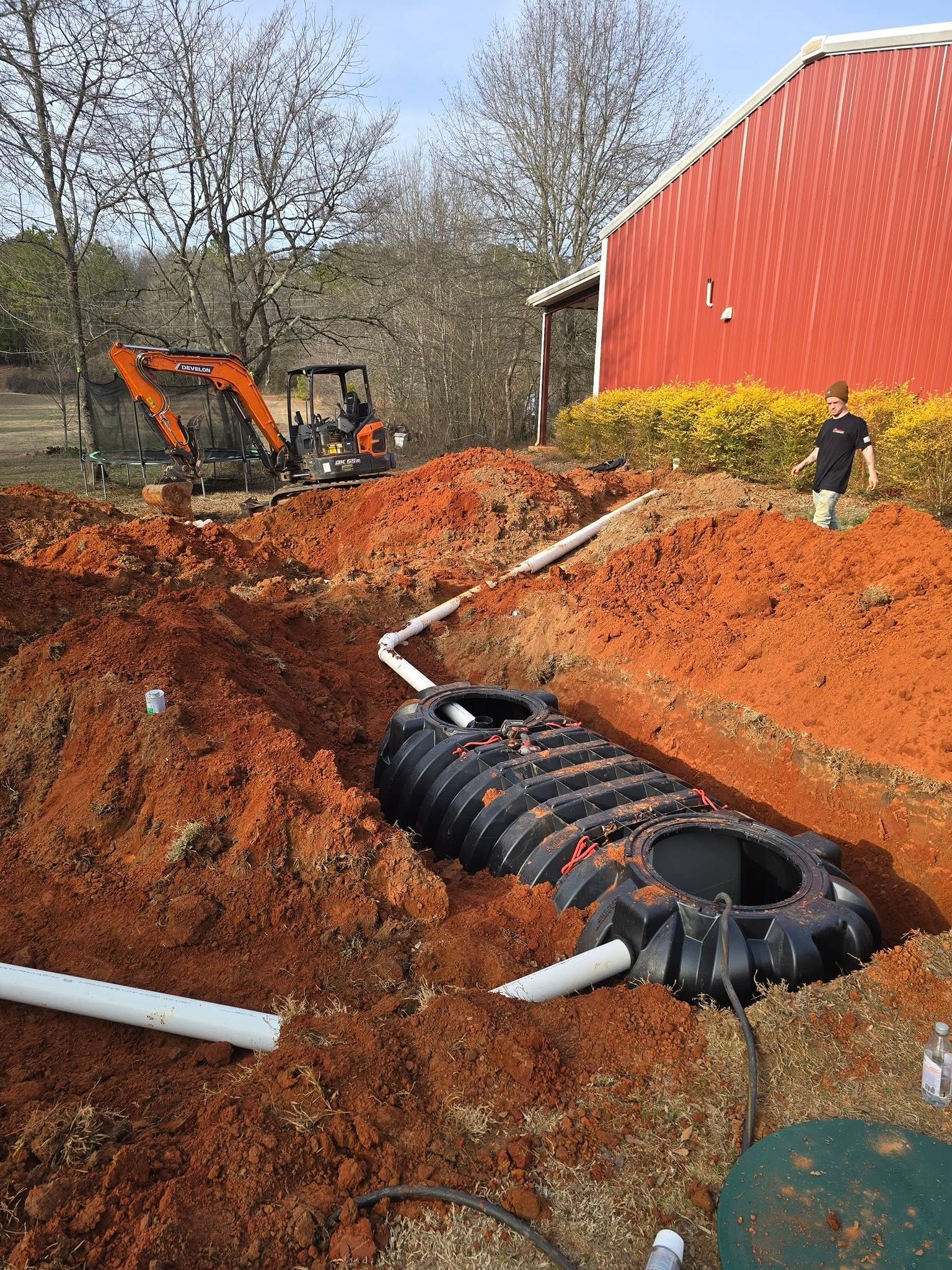
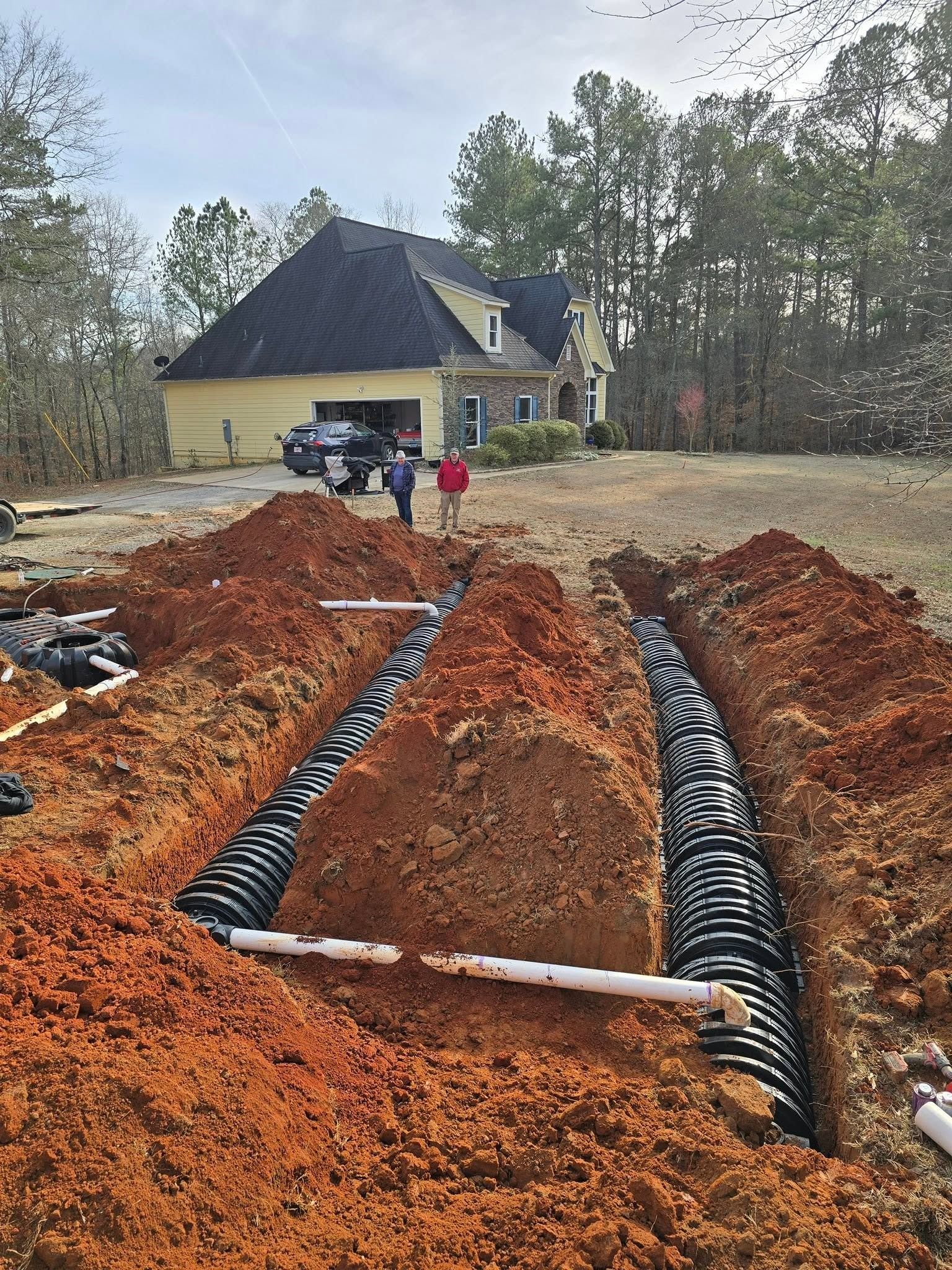
On septic, recurring whole-house slowness often isn’t your plumbing at all. A tank overloaded with solids, or a saturated drain field that can’t accept effluent, backs the entire system up toward the house. People snake, symptoms ease for two days, cycle repeats — because the cause is downstream. Step one is septic tank pumping (typically $300–$600); if slow drains persist with soggy ground or odors over the field, the field itself needs evaluation — see the signs in our drain field repair service page. This is exactly where having one company for both trades pays off: we don’t snake your lines three times before thinking to check the tank.
Why Chemicals Make It Worse
Liquid drain cleaners are caustic — sodium hydroxide or sulfuric acid. They dissolve some clog material and also attack pipe joints, gaskets, disposal seals, and (on septic) the bacteria your tank runs on. We regularly find chemically eaten joints behind “mystery” leaks. For a one-off clog, use a plunger or hand snake; for a recurring one, diagnose it.
How to Break the Cycle
- Stop treating symptoms — no more snake-and-hope on a drain that’s clogged three times.
- Get a camera inspection to identify which of the six causes you actually have.
- Apply the matching fix: jetting for buildup and roots, repair for bellies, vent clearing, or septic service.
- Keep it fixed: no grease or wipes down drains, screens in showers, tank pumped every 3–5 years, preventive jetting every 18–36 months if you cook heavily or have older pipes.
FAQ
How much does it cost to permanently fix a recurring clog?
Hydro jetting a single drain typically runs $400–$700; a full main line runs $500–$900. Camera inspections run $200–$400, usually credited toward the work. Pipe belly and root repairs run $1,500–$5,000+ depending on access. Fixed price before any work starts.
How long does hydro jetting last?
18–36 months on a properly cleaned line with reasonable habits — versus the weeks a snaking typically buys on a buildup-choked pipe.
Can I rent a hydro jetter myself?
We’d advise against it. Jetters run at thousands of PSI, can rupture aging pipe, and the wrong nozzle on the wrong line makes things worse. Professional jetting usually costs less than the rental plus the repair.
When should I stop DIYing and call?
Three clogs in the same drain within a year, multiple slow drains at once, sewer smells or gurgling, or any sewage backup — stop snaking and get it diagnosed. Backups are emergencies; stop running water and call.
Tired of the same drain coming back? Call (678) 758-3493 — Precision Plumbing & Septic offers camera diagnosis and 24/7 emergency response across Canton and Cherokee County, with one crew covering both sides of the system.
Need a hand with this in North Georgia?
One crew for plumbing and septic — honest quotes, 24/7 emergencies.