Quick answer
Tree roots get into sewer and septic lines through tiny gaps at the pipe joints, chasing the water and nutrients inside, then grow into a mesh that snags waste and causes slow drains, gurgling, and backups. Snaking only shears the roots off flush with the pipe wall, so they regrow within months. The lasting fixes are hydro jetting with a root-cutting head, a foaming root treatment, or repairing the invaded pipe section — and the only real prevention is keeping trees planted far enough from the lines. In North Georgia, roots are a leading cause of repeat backups because of mature hardwoods, shifting red clay, and older clay or cast-iron pipe.
Your kitchen sink runs fine most of the week — then every load of laundry sends it gurgling and the downstairs toilet backs up. You snake it, it clears, and a few months later you’re doing the whole thing again. In an older Canton or Woodstock neighborhood with big hardwoods out front, that pattern almost always means one thing: tree roots in your sewer line — not a clog you caused by pouring the wrong thing down the drain.
The short version: tree roots slip into sewer and septic lines through hairline gaps at the pipe joints, chasing the water and nutrients inside, then grow into a fibrous mesh that snags toilet paper and waste until the line backs up. Snaking shears the roots off flush with the pipe wall — which is exactly why the drain works for a week and the problem is back by the next season. The fixes that actually last are hydro jetting with a root-cutting head, a foaming root treatment, or repairing the invaded section of pipe.
We’ve cleared root-choked lines across Canton, Cherokee County, and North Georgia for 25+ years, and because one crew here handles both plumbing and septic, we can tell whether the roots are in your building sewer or in the septic drain field — two very different repairs — in a single visit.
How roots get into a “sealed” pipe
A sewer line isn’t as sealed as it looks. Every joint, every old fitting, and every hairline crack weeps a little moisture and warmth into the surrounding soil. To a tree, that’s a buried strip of water and fertilizer, and roots will travel a long way to reach it. Once a single root hair finds a gap, it thickens, works the joint open wider, and fans out into a net inside the pipe.
North Georgia makes this worse than most places:
- Mature hardwoods and pines. Established Canton, Woodstock, and Ball Ground lots often have decades-old oaks, poplars, sweetgums, and pines with root systems far wider than the canopy.
- Red clay that moves. Our red clay swells when wet and shrinks when dry, and that constant shifting cracks joints and pulls fittings apart — opening the gaps roots exploit.
- Older pipe. Homes built before the 1980s often still have clay-tile or cast-iron sewer lines with joints every few feet. Those joints are the number-one entry point.
The warning signs it’s roots, not a normal clog
Roots have a signature that’s different from a grease or wipes clog. Watch for these:
| Sign | Why it points to roots |
|---|---|
| Gurgling toilet after running water | Roots partly block the line, so air burps back through the trap |
| Whole house slows at once — worse after laundry or a shower | The blockage is in the main line, downstream of every fixture |
| Clog comes back every few months, like clockwork | Roots regrow after each snaking; a one-time clog doesn’t |
| Sewage backing up into the lowest drain | The mesh has caught enough waste to dam the line |
| One patch of lawn greener or soggier than the rest | Effluent is leaking out at the cracked joint the roots opened |
If you’ve snaked the same line more than twice in a year, stop guessing — that repeat pattern is the tell. Our full breakdown of why the same drain keeps clogging walks through the other causes so you can rule them out.
Why snaking never fixes it — and what does
A cable snake with a cutting head does clear the line: it spins through the root mass and reopens the pipe. The catch is that it only shaves the roots off at the pipe wall. The root outside the pipe is untouched, and it regrows into the same gap — usually within a few months in our climate. That’s the loop most homeowners get stuck in.
Here’s how the real options compare:
| Approach | What it does | How long it lasts |
|---|---|---|
| Cable snaking | Shears roots at the pipe wall | Weeks to a few months |
| Hydro jetting + root cutter | Scours the full pipe diameter clean, cuts roots back hard | 1–2+ years |
| Foaming root treatment | Kills root regrowth at the joint without harming the tree | Adds months–years between cleanings |
| Pipe repair / spot replacement | Removes the invaded joint entirely | Permanent for that section |
For most root cases, we start with hydro jetting to strip the line back to full diameter, then follow with a foaming treatment to slow regrowth. If a camera shows the joint is cracked wide open or the pipe is collapsing, no cleaning will hold and it’s time for a targeted sewer line repair of just that section. A camera line inspection is what tells us which of those you’re dealing with — that’s the first step in any real drain cleaning or leak and line-location call, so we’re fixing the actual problem instead of snaking the same pipe a fourth time.
On price: hydro jetting and drain cleaning typically run $350–$800, while cutting out and repairing an invaded section of line runs $600–$2,500 depending on depth and access. A full sewer line replacement — only when the pipe is genuinely failing — runs $8,000–$15,000+. We confirm the number before any work starts, and we’ll tell you honestly when jetting will hold for another year or two versus when you’re throwing money at pipe that needs replacing.
Roots in a septic system are a bigger deal
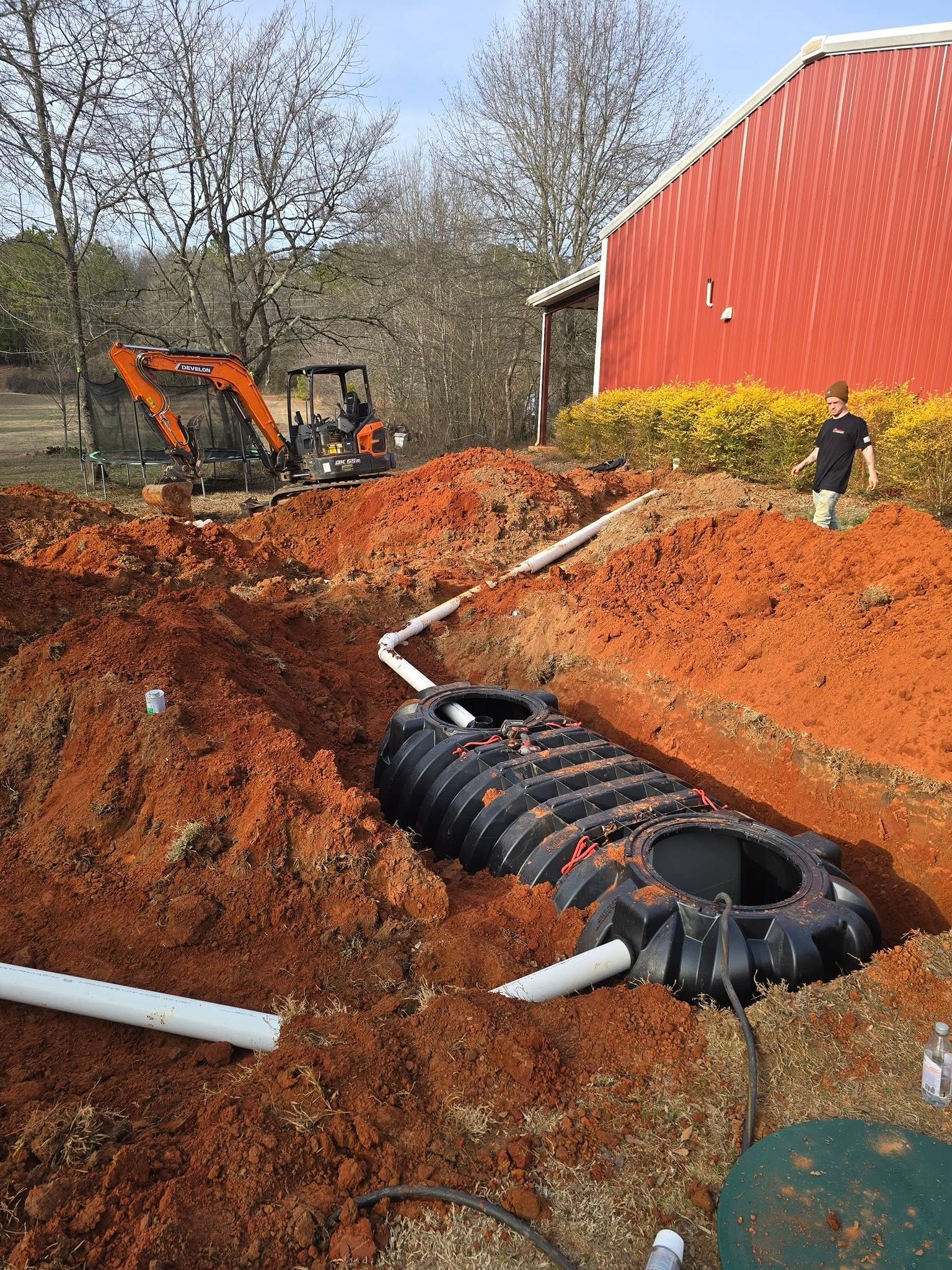
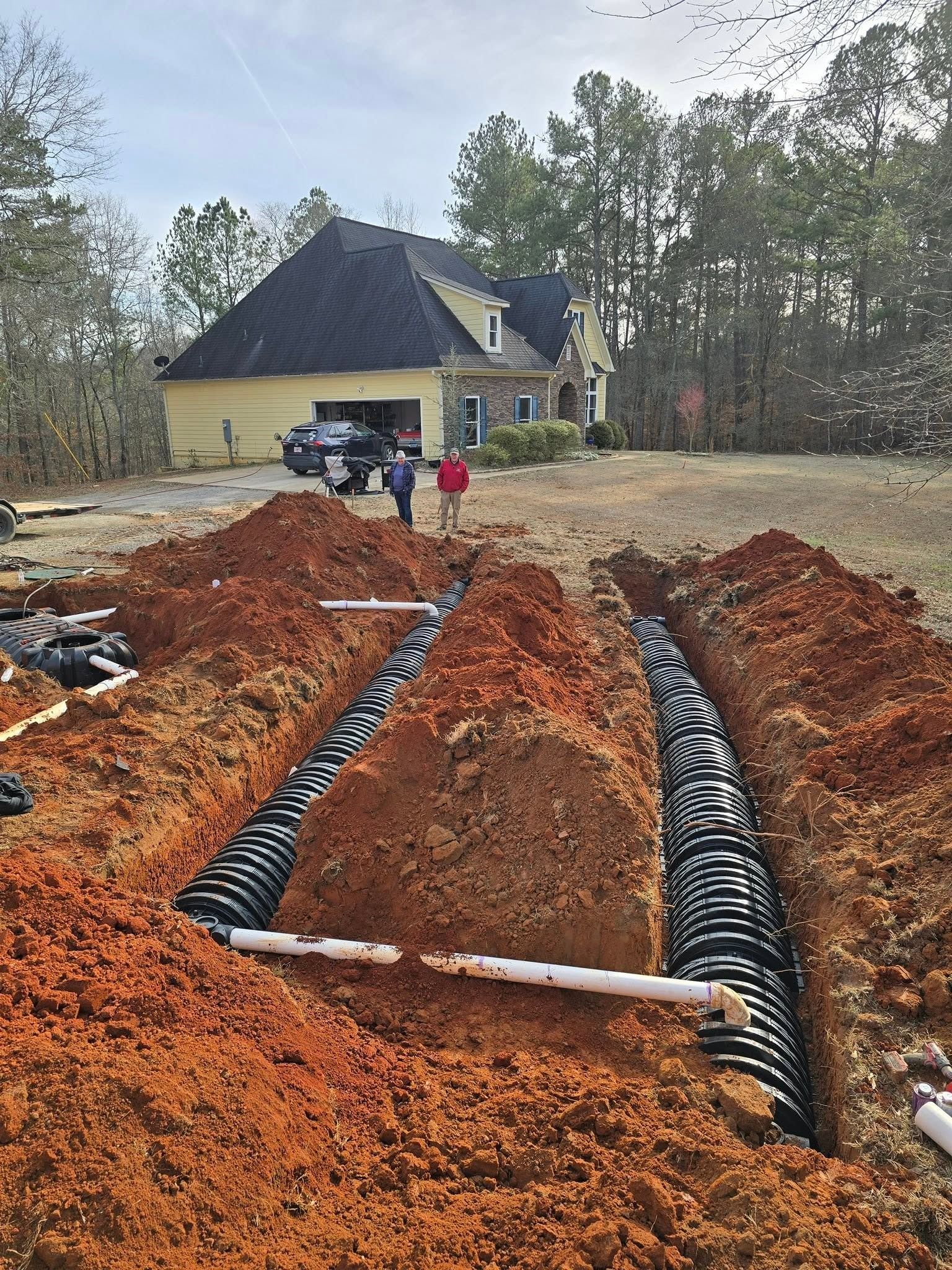
If your home is on septic, roots don’t just threaten the line to the tank — they’ll invade the drain field lines too, and that’s the most expensive part of the whole system. Roots clog the perforated laterals that let effluent soak into the soil, and once those lines are damaged, you’re looking at drain field repair or replacement rather than a quick cleaning.
This is why the authorities are blunt about landscaping. The EPA’s guidance on septic care states plainly: “Tree and shrub roots can ensnarl and damage drainfield pipes,” and advises homeowners to “plant trees the appropriate distance from your drainfield to keep roots from growing into your septic system” (EPA, How to Care for Your Septic System).
How to keep roots out for good
You can’t un-plant a 40-year-old oak, but you can control what goes in from here and slow what’s already there. The single best prevention is distance. University of Georgia Extension’s rule of thumb is simple: use a tree’s mature height as the minimum planting distance from your lines, then add more. As their circular on drainfield plantings puts it, “When tree roots invade these septic drain lines, the extra moisture and nutrients favor root and plant growth, and lines become clogged and damaged” (UGA Extension, Ornamental Plantings on Septic Drainfields).
| Tree type | Rough mature height | Minimum distance from lines |
|---|---|---|
| Small ornamental (crabapple, dogwood) | ~25 ft | 25 ft, ideally 50+ |
| Medium (river birch, maple) | ~40–50 ft | 50–75 ft |
| Large (oak, poplar, pine, willow) | ~60–80+ ft | Keep off the run entirely |
Willow, poplar, and sweetgum are the worst offenders — they’re water-seekers and should never sit near a sewer or septic run. A few more habits that help: keep trees off the path between your house, tank, and field; run a preventive jetting every 18–24 months if you already know roots are present; and don’t wait for a full backup to act — the cheapest root call is the one you make when the drain first starts gurgling.
FAQ
Can tree roots really break a sewer pipe?
Yes. Roots don’t need a big opening — a hairline crack or a slightly separated joint is enough. Once inside, the root thickens over the seasons and levers the joint apart or splits clay tile outright. What starts as a slow drain can end as a collapsed section of pipe if it’s ignored for years.
Will copper sulfate or “root killer” from the store fix it?
It helps as maintenance, not as a cure. Store-bought copper-sulfate crystals can kill root tips at the joint and slow regrowth, but they won’t clear a line that’s already choked, and they do nothing for a cracked pipe. We use professional foaming treatments after jetting because the foam coats the whole pipe and reaches roots the crystals miss — but the mechanical cleaning has to come first.
How do I know if the roots are in my sewer line or my septic drain field?
That’s exactly what a camera inspection settles. Roots in the building sewer show up as a whole-house slowdown and backups at the lowest drain; roots in a septic drain field show up as soggy, extra-green patches over the field and slow drains that don’t fully clear even after pumping. Because we run both plumbing and septic, we check the right one instead of guessing.
Is a root backup an emergency?
If sewage is coming up into the house, treat it as one — stop running water and call. A slow, gurgling drain that isn’t backing up yet isn’t a 2 a.m. emergency, but it is a “handle it this week” problem, because roots only grow and the next backup is a matter of when, not if.
Dealing with the same drain backing up every few months? Call (678) 758-3493 — Precision Plumbing & Septic runs a camera to find the real cause, clears roots for good, and covers both your plumbing and septic in one visit across Canton, Woodstock, and Cherokee County. Reach us anytime through our contact page.
Need a hand with this in North Georgia?
One crew for plumbing and septic — honest quotes, 24/7 emergencies.